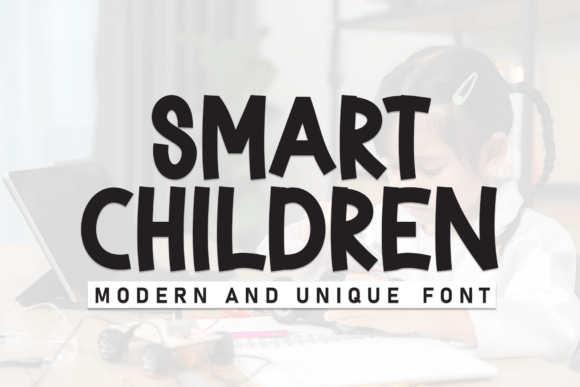
Smart Children: A Friendly Display Font for Web Design
Smart Children in a Boutique Online Store Header
Testing Smart Children as the primary display font for a boutique online store’s hero section was an interesting challenge. The font’s clean lines and subtle rounded edges gave the header a friendly yet professional feel, which aligned perfectly with the brand’s image. I placed it over a full-width banner image of curated products, and the result felt approachable without sacrificing visual clarity. Smart Children is a display font that works well when you want to convey warmth while maintaining a sense of order.
I experimented with different sizes and weights, but the default weight proved most effective for readability on both desktop and mobile screens. The balanced letterforms made the headlines easy to scan, even at smaller sizes. This is crucial for e-commerce sites where users often skim through content quickly to find what they’re looking for.
Smart Children for Coaching Website Titles
Next, I used Smart Children on a coaching website’s landing page, specifically for the main title and subheadings. The font’s casual vibe matched the tone of the site, which focused on personal development and self-improvement. It felt like a natural fit—something that wouldn’t overwhelm the reader but would still stand out enough to draw attention.
The rounded edges helped soften the impact of the text, making the content feel more inviting. For a coaching or wellness site, this can be a powerful psychological cue. Smart Children as a display font can help build trust and create a welcoming atmosphere, especially when paired with high-quality imagery or testimonials.
I also considered how Smart Children would perform on dark mode backgrounds. The contrast remained strong, and the font didn’t lose its legibility, which is essential for ensuring accessibility across different platforms and user preferences.
Smart Children in a Course Sales Page CTA
When designing a course sales page, I wanted the call-to-action buttons to stand out without being too aggressive. I used Smart Children for the button text, which added a touch of personality to the design. The font’s simplicity allowed the message to remain clear, while the rounded edges softened the appearance of the buttons, making them feel less like traditional “buy now” prompts.
It’s important to remember that display fonts like Smart Children are best used for short phrases or headlines. In this case, the button copy was concise—“Enroll Now”—which worked well with the font’s structure. Using it for longer paragraphs or body text could reduce readability, so I reserved it for decorative elements and key messaging points.
Smart Children for Blog Headers and Section Headings
In a blog redesign project, I integrated Smart Children into the headers and section titles. The font’s friendly character complemented the blog’s focus on lifestyle and creativity. Each post title stood out clearly, and the consistent use of Smart Children helped maintain a cohesive visual identity throughout the site.
I paired Smart Children with a simple sans serif font for the body copy, which created a nice contrast and improved overall readability. This kind of font pairing is common in web design—using a display font for headings and a more neutral typeface for the rest of the content. It keeps the design visually engaging while ensuring that the text remains easy to read.
For responsive layouts, I made sure that Smart Children scaled appropriately on smaller screens. Testing showed that it performed well across various resolutions, maintaining its legibility and aesthetic appeal. That’s one of the advantages of using a well-designed display font—it adapts naturally to different contexts.
Smart Children in Digital Branding and Campaign Pages
For a digital branding project, I used Smart Children in the logo text and campaign banners. The font’s neatness and approachability made it ideal for creating a consistent brand identity. Whether it was the main headline on a campaign landing page or part of a social media graphic, Smart Children brought a sense of professionalism and friendliness to the visuals.
I also explored how Smart Children could be used in promotional emails and marketing materials. The font’s clean look translated well to print and digital formats, making it versatile for different types of design work. When choosing a display font for branding, it’s important to consider how it will appear across all touchpoints—website, email, social media, and beyond.
Before finalizing the font for any project, I always check if it supports multilingual characters and has proper licensing for commercial use. Smart Children seems to cover these bases, making it a solid choice for designers who need a reliable and stylish display font for their clients or personal projects.