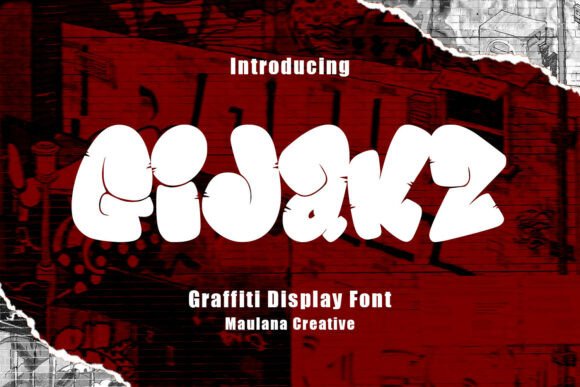
Gijaks Font for Creative Branding Projects
I was recently approached by a local artisan who wanted to rebrand her handmade soap shop. She had a clear vision—something warm, approachable, and just a little bit playful. As I opened my design board, I knew I needed a font that could carry that tone without feeling too casual or too formal. That’s when I reached for Gijaks, a unique and interesting display font that I’d been testing out for a while.
Gijaks in Logo Design for Handmade Brands
Gijaks immediately stood out on the logo mockup. Its quirky character gave the brand a sense of personality, which is exactly what this small business needed. The curves and subtle irregularities in the letterforms made the logo feel handcrafted, much like the products themselves. It worked well as a display font for the main name but still maintained enough clarity to be legible at smaller sizes when used on tags or packaging.
I paired it with a clean sans serif font for the supporting text, which helped balance the visual hierarchy. This combination felt both modern and nostalgic, something that resonated with the target audience of eco-conscious consumers looking for natural beauty products.
Gijaks on Packaging Mockups and Product Labels
When designing the product labels, I experimented with different weights and spacing. Gijaks looked incredible on a label sticker, especially when placed over a textured background. The font’s slight irregularity added an organic feel that matched the handmade nature of the soaps. I found that using it in short bursts—like on the front label or the back of the box—helped maintain readability without overwhelming the eye.
One thing I noticed early on was how well Gijaks performed in digital mockups. Whether it was on a website hero section or an Instagram post, it always caught attention without being too loud. It felt like the perfect match for a brand that wanted to stand out but not shout about it.
Gijaks for Social Media Graphics and Brand Consistency
As I moved into creating social media assets, I realized how versatile Gijaks could be. It wasn’t just limited to logos or packaging—it worked equally well on promotional posts, event flyers, and even email headers. The font’s quirky yet elegant appeal made it feel fresh and engaging, which is crucial for maintaining a consistent brand voice across platforms.
I used it in headlines for Instagram stories and Facebook ads, where it helped draw the eye and reinforce the brand’s personality. When combined with a minimalist layout, Gijaks became a subtle but powerful tool for brand recognition. It didn’t need to be the only font in play, but it always brought a touch of originality to the design.
Gijaks in Web Design and Digital Branding
For the website, I tested Gijaks in the header and navigation bar. While it worked beautifully as a display font, I made sure to use a more readable typeface for body text. This way, the site remained professional while still carrying the same playful spirit as the logo and packaging.
I also considered its performance on mobile screens. Even though Gijaks has a distinctive style, it scaled well without losing its charm. This made it ideal for digital branding, where first impressions are everything.
Gijaks for Event Invitations and Print Materials
Later on, the client asked for some event invitations for a small launch party. Again, Gijaks came in handy. It looked amazing on printed materials, especially when used with a soft watercolor background. The font’s unique shapes gave the invitations a tactile, almost handmade quality that aligned perfectly with the brand’s ethos.
What I appreciated most was how Gijaks adapted to different mediums. Whether it was on a physical poster, a digital flyer, or a printed business card, it always felt intentional and well-suited to the context. It never looked forced or out of place, which is something I can’t say for many display fonts.
Gijaks and Typography Pairing Tips
When working with Gijaks, I found that pairing it with a contrasting font was key. A serif font like Playfair Display worked well for headings, while a modern sans serif like Montserrat was great for body text. This contrast helped guide the viewer’s eye and created a balanced visual rhythm.
I also took advantage of any alternates or ligatures that came with the font. These small details added depth to the design and made the brand feel more polished and thoughtfully crafted.
If you’re considering using Gijaks in your next project, I recommend testing it in multiple contexts before committing. It’s a display font, so it shines best in short-form text and headlines. But when used with care, it can become a cornerstone of your brand identity, adding character and memorability to every design element.